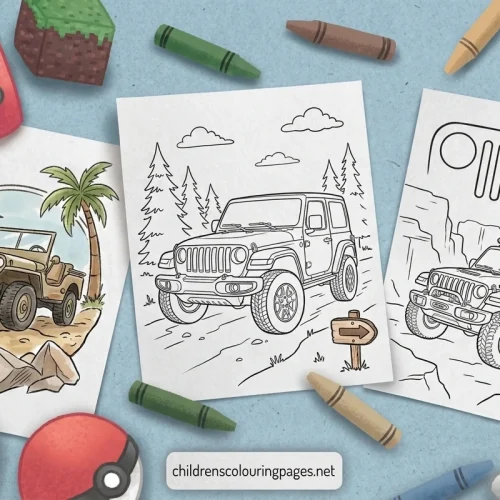
Children often seem to gravitate naturally toward coloring, picking up crayons and markers without much prompting. While it might appear to be a simple pastime, the activity has far-reaching effects on the developing brain. When parents and educators provide access to a variety of basic coloring pages, princess coloring pages, and even insects coloring pages, they are not just keeping kids busy they are nurturing a complex mix of cognitive, emotional, and motor skills. Coloring is a deceptively simple activity that packs multiple benefits for young minds.

Table of Contents
How Coloring Helps Child Brain Development
The question of how coloring helps child brain development is both fascinating and practical. At its core, coloring engages multiple areas of the brain simultaneously. When a child selects a color, plans how to fill a space, and applies it to a page, they are exercising coordination, decision-making, and visual-spatial skills all at once.
For example, using educational coloring pages allows children to connect shapes, patterns, and letters, helping with recognition and comprehension. The hand-eye coordination required to stay within lines stimulates neural pathways that are essential for writing and fine motor control. This means that a simple activity like coloring can have a direct impact on brain development in children, laying the foundation for later skills in reading, writing, and even math.
Cognitive Benefits of Coloring
Coloring isn’t just about producing pretty pictures. It’s an exercise in cognition. Children engage in problem-solving when choosing colors, thinking critically about combinations, and understanding contrasts. This is why kids learning activities often incorporate coloring exercises alongside puzzles or matching games.
A table of key cognitive benefits can illustrate this more clearly:
| Cognitive Skill | How Coloring Helps | Example Activity |
|---|---|---|
| Attention & Focus | Children must concentrate on staying inside lines and selecting colors | Detailed princess coloring pages |
| Memory | Recognizing colors and shapes strengthens recall | Repeatedly coloring a sequence of objects |
| Visual-Spatial Awareness | Planning where colors go helps interpret spatial relationships | Completing insects coloring pages with attention to details |
| Creativity | Encourages imagination and novel thinking | Mixing unexpected colors in scenes |
This shows that coloring serves as a foundation for cognitive development by creating neural connections that support learning in multiple domains.
Motor Skill Development Through Coloring
Fine motor skills are essential for young children, and coloring provides a natural way to develop them. Controlling a crayon or pencil strengthens muscles in the hands and fingers, improves dexterity, and improves coordination. Parents can observe measurable progress when kids switch from scribbling to filling smaller areas with precision.
Coloring benefits for kids extend into practical skills too, such as handwriting and tool manipulation. Early practice with child brain development activities helps children transition more easily to tasks requiring delicate hand movements, from writing letters to using utensils.
Emotional and Social Growth
While cognitive and motor skills are essential, coloring also touches emotional development. Children feel a sense of accomplishment and pride when they complete a page. This achievement can boost confidence, especially when they receive positive feedback from caregivers or peers.
Moreover, group coloring activities can promote social skills. Sharing materials, discussing color choices, and collaborating on a single sheet encourages communication and empathy. By incorporating creative activities for children in classroom settings, educators can nurture not only brain development but also emotional intelligence.

Color Recognition and Decision Making
The simple act of selecting colors helps children learn about contrast, hues, and combinations. Understanding which colors look good together or which are appropriate for a particular subject builds decision-making skills.
| Color Skill | Learning Outcome | Activity Example |
|---|---|---|
| Recognition | Identifying colors and shades | Using basic coloring pages with labeled colors |
| Matching | Pairing colors with objects | Coloring fruits and vegetables with realistic shades |
| Decision-making | Choosing colors based on preference or pattern | Creating personal designs on blank sheets |
These skills contribute to the child’s overall early childhood learning, preparing them for more complex tasks like design thinking and pattern recognition.
Boosting Focus and Patience
Many children struggle with maintaining attention. Coloring encourages focus because it requires concentration over a period of time. Longer sessions enhance patience, teaching children to work on a task until completion.
Educational experts recommend incorporating coloring as part of kids cognitive development routines, highlighting that children who engage regularly in focused coloring activities often perform better in structured learning environments.
Coloring as a Tool for Learning and Creativity
Using educational coloring pages allows children to learn about animals, plants, letters, or numbers in a hands-on way. For example, insects coloring pages can teach kids about different species while keeping them engaged through creativity.
This dual approach learning and creativity is central to why coloring is effective for brain development. Children are not only absorbing facts; they are practicing application, observation, and imagination.
Table: Comparison of Coloring Types for Brain Development
| Type of Coloring Page | Skills Developed | Recommended Age |
|---|---|---|
| Basic coloring pages | Fine motor, focus, color recognition | 2–5 years |
| Princess coloring pages | Creativity, patience, detail orientation | 4–8 years |
| Insects coloring pages | Observation, learning, cognitive mapping | 5–10 years |
| Educational coloring pages | Knowledge application, early literacy | 3–8 years |
| Freeform coloring | Creative thinking, emotional expression | 3+ years |
This table demonstrates that coloring can be tailored to suit developmental goals at different stages of childhood.
How Coloring Improves Hand-Eye Coordination
Children coordinate visual input with hand movements during coloring. This practice strengthens the neural pathways involved in hand-eye coordination. It is particularly important for tasks like catching a ball, writing, or playing an instrument.
Integrating kids coloring activities that require following complex shapes can challenge children in ways that encourage precise movement and control. The repeated practice gradually improves coordination and confidence in their motor skills.
Coloring and Language Skills
Language development may not seem directly connected to coloring, but it is. When children discuss their artwork or describe what they are coloring, they practice vocabulary and expressive language skills.
Using themed princess coloring pages or insects coloring pages can introduce children to new terms, species names, or story-based concepts. These conversations support the brain’s linguistic centers while also reinforcing memory.

Cognitive Benefits Through Repetition
Repetition is a key aspect of learning. Coloring similar objects multiple times—such as a series of animals or shapes—reinforces recognition, memory, and planning skills. It’s why consistent access to coloring pages for kids can create a measurable impact on brain development in children.
The act of repeated practice also encourages pattern recognition, an essential skill for math and logic later in school.
Emotional Regulation and Stress Relief
Coloring is calming. Engaging in focused, repetitive coloring can reduce anxiety and help children regulate emotions. The control over what they color and how allows children to express themselves safely.
Therapists often recommend coloring as a form of mindfulness for children, which can improve attention span and emotional resilience over time.
Coloring and Early STEM Learning
Although often associated with art, coloring can indirectly support early STEM learning. By introducing shapes, patterns, symmetry, and sequencing through educational coloring pages, children develop foundational skills for mathematics and science.
For example, coloring a princess castle can teach spatial awareness and geometry. Insects coloring pages may incorporate counting or categorizing species, subtly teaching biology.
Table: Summary of Key Benefits of Coloring for Brain Development
| Benefit | Description | Example Activity |
|---|---|---|
| Fine motor skills | Hand and finger muscle development | Filling small sections in coloring sheets |
| Cognitive growth | Problem-solving, decision-making | Choosing colors, pattern planning |
| Emotional regulation | Stress relief and focus | Completing a basic coloring page calmly |
| Language skills | Vocabulary expansion | Discussing scenes from princess coloring pages |
| Early STEM skills | Patterns, counting, spatial understanding | Insects coloring pages and shape exercises |
This table underscores that coloring has multiple overlapping benefits for child brain development activities.
Tips for Maximizing Brain Benefits Through Coloring
- Provide a variety of coloring pages for kids to expose children to new shapes and concepts.
- Encourage detailed coloring to improve fine motor skills.
- Discuss the colors, objects, or stories behind the page to boost language skills.
- Incorporate group coloring sessions to foster social learning.
- Offer both structured and freeform coloring activities to balance creativity and focus.
Conclusion
Coloring is far more than a simple pastime for children. Its impact on Coloring Helps Child Brain Development spans cognitive, motor, emotional, and social domains. From strengthening hand-eye coordination and fine motor skills to enhancing creativity, memory, and language, coloring offers a rich environment for early brain growth. By incorporating a mix of basic coloring pages, princess coloring pages, and insects coloring pages, parents and educators can provide varied and engaging experiences that support children’s holistic development.
In short, coloring is a deceptively simple activity with profound benefits for child brain development activities, laying the foundation for lifelong learning, creativity, and emotional well-being.