Color mixing usually feels simple when you first learn it, yet the moment you actually start painting or working with colored pencils, questions pop up. Someone notices that green doesn’t appear in the basic paint set, so they start wondering how it’s created. The short explanation comes from basic art lessons, but the process becomes more interesting once you start experimenting.
When people learn through simple creative activities like basic coloring pages, they often start noticing how colors interact naturally. A child filling in leaves or grass might pause and ask why green appears when certain colors blend together. That curiosity leads straight into the world of color mixing and how artists think about combining shades. lets explore what two colors make green?
Color mixing is part observation and part experimentation. The same two colors can produce slightly different greens depending on how they’re blended, how much paint is used, or even the type of material. Some greens look bright and fresh. Others turn darker or muted. The idea starts with just a pair of colors, though the variations keep expanding from there.
Table of Contents
Mixing Colors: What Two Colors Make Green?
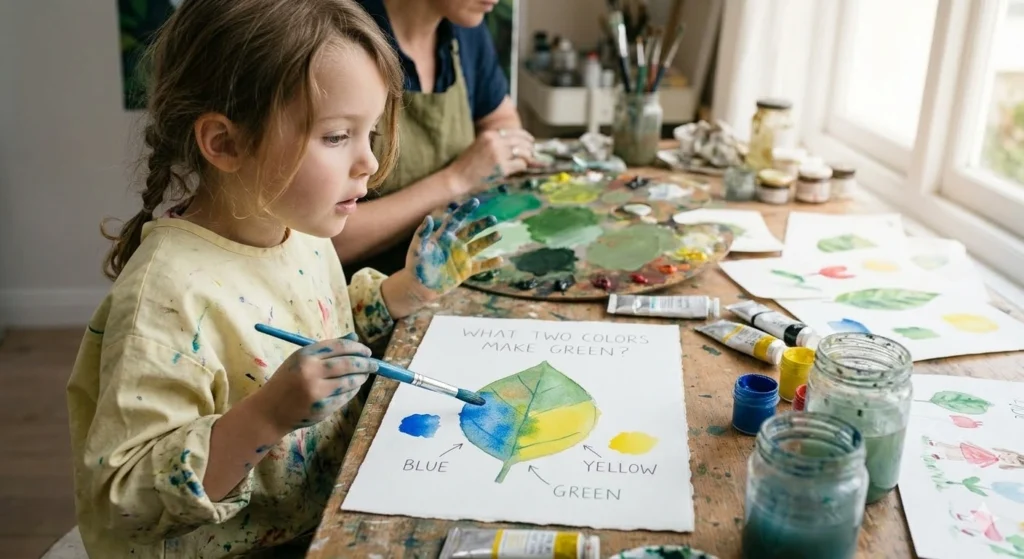
The basic answer to what two colors make green is simple: blue and yellow. These two belong to a group called primary colors, which sit at the center of traditional paint and pigment systems. When blue and yellow combine, the result is green, one of the classic secondary colors.
This idea appears in the earliest lessons of basic color theory. Primary colors cannot be created by mixing other pigments, but they can combine with each other to produce new colors. Blue plus yellow forms green, red plus yellow forms orange, and red plus blue produces purple.
Artists often describe this process using color wheel basics. The color wheel places primary colors at equal distances from one another. Between them sit the secondary colors formed through color mixing. Green appears between blue and yellow because it comes directly from those two pigments blending together.
The concept sounds simple, yet the exact shade of green changes depending on the ratio of the two colors. A little more yellow can produce a lighter, brighter green. A stronger blue influence creates deeper tones.
Understanding primary and secondary colors
Before exploring green color mixing, it helps to understand the structure of the color system artists usually learn first. The traditional art color wheel relies on three primary colors: red, blue, and yellow. These colors act as the foundation for most paint combinations.
When two primary colors mix together, they produce secondary colors. Green belongs to that group along with orange and purple. The process works because pigments absorb and reflect different wavelengths of light, creating the visual result we recognize as color.
Here’s a simplified table showing how primary colors interact:
| Primary Color 1 | Primary Color 2 | Resulting Secondary Color |
|---|---|---|
| Blue | Yellow | Green |
| Red | Yellow | Orange |
| Red | Blue | Purple |
This structure forms the basis for most beginner lessons in color wheel basics and continues to guide artists working with paints, markers, or digital design tools.
Mixing blue and yellow in real paint
When someone actually tries mixing blue and yellow, the process becomes a bit more nuanced than the simple explanation. Paint pigments differ from brand to brand, and those differences affect the final shade.
For example, a warm yellow paired with a deep ultramarine blue can produce a slightly darker green. A cooler blue mixed with bright lemon yellow might create a vibrant grassy tone. These small differences make paint color mixing feel more like exploration than strict science.
Artists often experiment with small test blends before applying the final color to a painting. By adjusting the ratio of blue and yellow, they gradually discover the exact green they want.
| Blue Amount | Yellow Amount | Resulting Green Shade |
|---|---|---|
| Equal mix | Equal mix | Balanced medium green |
| More yellow | Less blue | Bright lime green |
| More blue | Less yellow | Deep forest green |
This table shows how slight changes in proportion influence the outcome.
How artists approach green color mixing
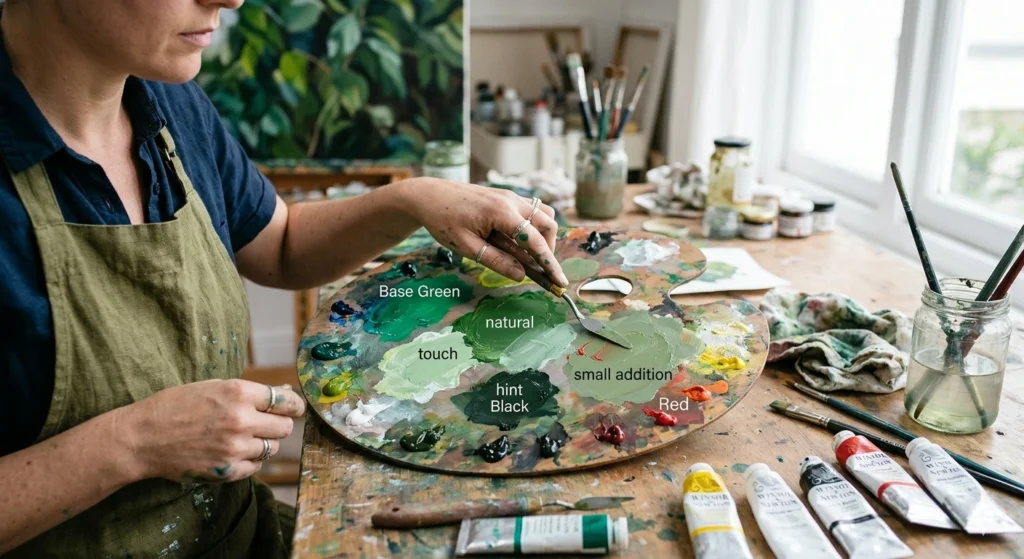
For painters, green color mixing rarely stops with just two pigments. Once the basic green appears, artists often modify it further. A touch of white lightens the shade. A hint of black deepens it. Small additions of red can mute the brightness, producing more natural tones.
Nature itself rarely shows pure, bright green. Leaves, grass, moss, and plants all contain subtle variations. That’s why artists continue adjusting mixtures until the color feels right for the scene.
This practice connects closely to art color combinations. Green might pair with brown earth tones, yellow sunlight highlights, or dark blue shadows depending on the subject being painted.
Learning color mixing through creative activities
People often understand color mixing best through simple creative exercises. Children coloring animals, flowers, or landscapes start recognizing patterns naturally. When someone works on insects coloring pages, for instance, they may experiment with different greens for wings, leaves, or backgrounds.
Through that process they begin noticing how certain shades look brighter while others feel softer or darker. Those observations gradually build an intuitive understanding of basic color theory.
Even adults who return to drawing or painting after many years often rediscover these same ideas. The simple act of blending colors can feel surprisingly satisfying.
Why mixing blue and yellow works visually
The reason mixing blue and yellow produces green comes down to how pigments interact with light. Yellow reflects light in a range that includes green wavelengths. Blue absorbs red wavelengths while reflecting blue and some green.
When the two pigments combine, the overlapping reflected wavelengths appear as green to the human eye. That interaction forms the visual basis for how to make green paint using traditional pigments.
The explanation might sound technical, yet artists usually experience it through practice rather than physics. After a few experiments, the relationship between blue and yellow becomes easy to remember.
Exploring different shades of green
Once someone understands the answer to what two colors make green, the next step involves discovering how many variations exist. Green can shift dramatically depending on the pigments involved.
Here are a few examples artists commonly create:
| Green Shade | How It’s Mixed |
|---|---|
| Lime green | Yellow-heavy blue and yellow mix |
| Forest green | Blue-heavy mix with slight black |
| Olive green | Green mixed with a touch of red or brown |
| Mint green | Green combined with white |
Each shade emerges from the same basic pair of colors but moves in a slightly different direction through additional paint color mixing.
Color mixing in children’s art activities
Color exploration becomes even more engaging when children experiment with it during creative play. Activities involving drawing, painting, or coloring naturally lead to questions about how colors interact.
When kids work with princess coloring pages, they might blend greens for dresses, gardens, or decorative details. While they may not think about color wheel basics, they’re quietly learning the same principles artists use.
These moments of curiosity often become the starting point for deeper artistic interest.
How artists control color balance
Controlling green tones requires patience. Too much yellow can push the color toward brightness, while too much blue creates darker shades. The balance between the two shapes the final result.
Artists sometimes mix several greens on a palette before choosing one for the painting. This step allows them to compare variations side by side. Through repeated green color mixing, they begin recognizing subtle differences in hue and temperature.
That awareness becomes part of developing an eye for color.
Which two colors mix together to make green
People often phrase the question slightly differently, asking which two colors mix together to make green. The answer remains the same: blue and yellow. The simplicity of that combination is why it appears in nearly every introduction to basic color theory.
The real learning happens afterward, when artists begin experimenting with different pigments and proportions. Even experienced painters continue adjusting their mixes to match specific subjects.
Nature alone contains hundreds of shades of green, from pale moss to deep evergreen forests.
How to mix blue and yellow to make green in practice?
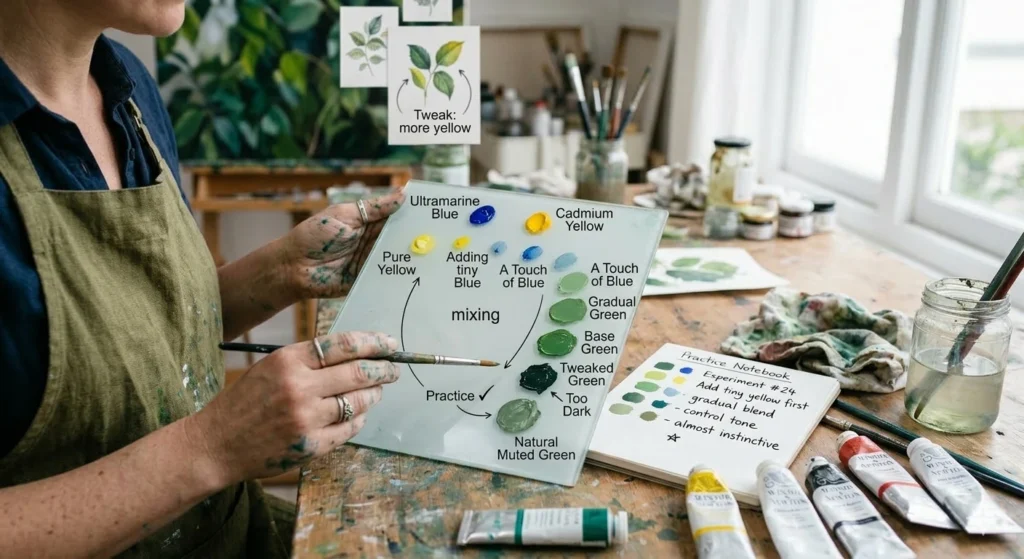
When learning how to mix blue and yellow to make green, artists usually begin with small amounts of each color. Starting with yellow and slowly adding blue gives better control over the final tone.
This approach allows gradual adjustment rather than accidentally creating a shade that’s too dark. Once the basic green appears, artists can tweak the mixture by adding tiny amounts of other colors if needed. The process becomes smoother with practice. After enough experiments, recognizing the right balance becomes almost instinctive.
Why green appears so often in art
Green occupies a large portion of the natural world. Trees, grass, leaves, and many plants rely on chlorophyll, which reflects green light. Because of that, artists frequently work with green tones when painting landscapes or nature scenes.
The ability to control art color combinations involving green becomes essential for creating depth and realism. Subtle differences between warm and cool greens help distinguish sunlight, shadow, and distance.
Once someone understands color mixing, green becomes one of the most versatile colors on the palette.
Final thoughts
The answer to what two colors make green may sound simple at first, yet it opens the door to a much broader understanding of art and perception. Blue and yellow form the foundation, but endless variations appear through experimentation.
Through repeated color mixing, artists gradually learn how pigments interact, how proportions affect shades, and how green works within larger color palettes. Whether someone discovers these ideas through painting, drawing, or simple creative activities, the process always starts with curiosity about how colors come together.